
 By
By Every World Cup brings a brand new ball, and this time it’s called the Trionda. If you love football, chances are you have already spotted it on TV, in ads, or even in your favorite player’s hands during warm ups. This ball is more than just something to kick around the field, it carries a story behind its name, its colors, and even the technology hidden inside it.
In this article, we will walk through everything you need to know about the FIFA World Cup ball this year. From its design to the smart tech inside it, and even where you can grab one for yourself, we have covered it all in a simple and easy way.
What Is the FIFA World Cup Ball Called This Year?
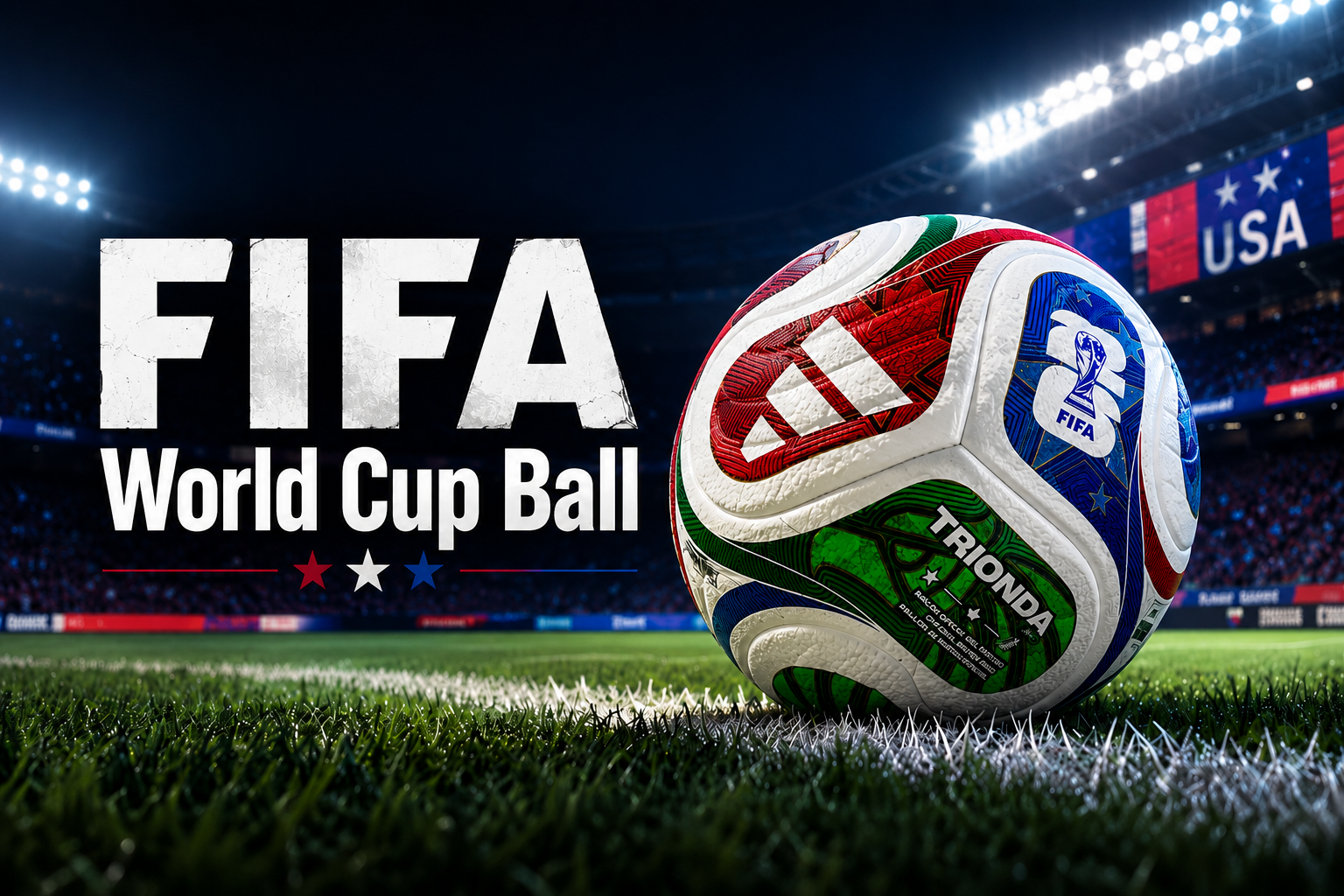
The official FIFA soccer ball for this World Cup is the Adidas Trionda. Adidas made this ball for a very special reason. This is the first time in history that three countries are hosting the World Cup together, and those countries are Canada, Mexico, and the United States. Because of this unique setup, Adidas wanted the ball to represent all three nations at once.
The name Trionda comes from Spanish words and means “three waves.” This name was picked carefully to show how the three host countries are coming together for one massive event. Every time you see this ball roll across the field, it’s a small reminder of the teamwork behind this tournament, and honestly, that makes it feel a bit more special than past World Cup balls.
The World Cup brings nations together on the football field, and tennis has its own big stage where players chase global glory too. Check out Tennis Buffstreams for live matches and schedules.
The Design Story Behind the Trionda
This FIFA world cup soccer ball looks quite different from the balls we have seen in past tournaments, and there is a solid reason for that. It is built using just four panels, which might sound like a small detail, but it is actually the lowest number of panels ever used on any World Cup ball. Fewer panels mean a smoother surface and a more consistent shape when the ball is in motion.
The colors on this ball are bright and full of meaning too. You will notice red, green, and blue spread across its surface, and each color along with its symbol represents one host nation. A maple leaf stands for Canada, an eagle represents Mexico, and a star is there for the United States.
On top of that, there are golden touches on the ball that quietly remind us of the World Cup trophy itself, tying the whole design together nicely.
Smart Technology Packed Inside the Ball
Here is the part that really makes this fifa ball world cup edition stand out from anything we have seen before. Inside the Trionda, engineers placed a small motion sensor chip that works at an impressive 500Hz. In simple words, this means the chip can track the ball’s every movement with incredible speed and accuracy, something older balls simply could not do.
This chip sends real time information straight to the VAR system used by referees during matches. This technology helps officials make tricky calls much faster, especially when it comes to offside decisions that used to take forever to review.
So this ball is not just something players kick around for ninety minutes, it actually plays a real part in making the game fairer for every team on the field.
The Trionda represents three nations coming together on the football field, and cricket brings its own set of nations together on a global stage too. Check out Cricket Buffstreams for live coverage and match schedules.
How the Trionda Performs on the Pitch
Players care a lot about how a ball feels, moves, and reacts during a match, and the Trionda was clearly built with all of that in mind. Its surface has small textured patterns that you can only notice if you look closely, and these patterns are not just for looks. They help the ball fly in a straighter path and stay steady in the air, even when strong winds or rain try to knock it off course.
The outer layer of the ball is also water resistant, which means it does not soak up water and become heavy during rainy matches like older balls used to. On top of that, this fifa world cup ball carries the FIFA Quality Pro rating, which is the highest mark any match ball can receive. To earn this rating, the ball had to pass strict tests covering its size, shape, weight, and how well it bounces under different conditions.
The World Cup unites fans around one ball and one tournament, and boxing brings that same intensity to every fight night. Follow Boxing Buffstreams for upcoming bouts and where to watch them live.
Where Is the Trionda Ball Made?
Here’s something that will make every Pakistani fan proud. This FIFA world cup ball is actually made in Sialkot, Pakistan, a city known around the world as the true home of football manufacturing.
A company called Forward Sports is behind this incredible ball, and they have a long history with Adidas, having also made the Al Rihla for Qatar 2022, the Telstar 18 for Russia 2018, and the Brazuca for Brazil 2014.
Even though Pakistan has never played in a World Cup, its skilled workers have quietly shaped the tournament for decades. Sialkot alone produces more than two thirds of all footballs used around the globe, with local craftsmen combining hand skills with modern technology to build something this advanced. So every time a player strikes the Trionda on the world’s biggest stage, there is a small piece of Pakistan traveling with it.
Trionda vs Al Rihla: What’s Different This Time
If you remember the last World Cup held in Qatar, you might recall the ball used back then called the Al Rihla. That ball also came packed with motion sensor technology, so the idea of smart tracking chips is not entirely new. However, the Trionda takes things a step further with its four panel build, which ends up being simpler and smoother compared to what came before it.
The overall look between the two balls is quite different as well. The Al Rihla drew its design inspiration from Arabic culture and traditional sailing boats, giving it a very distinct regional feel. The Trionda, on the other hand, celebrates three nations coming together at once, showing this through its wave shaped panels and symbols representing each host country.
Even with these design differences, both balls share one important goal, and that is helping matches become fairer and more enjoyable for fans watching around the world.
From football to combat sports, every game has its own story worth following. Buffstreams brings all of it together, live streams and schedules for every major sport in one place.
Where You Can Buy the Trionda
If you are hoping to own this ball for yourself, you actually have a few different options depending on your budget and needs. The Pro version is the exact same ball used by professional players out on the field during official matches, and it costs more money simply because it includes all the official technology and premium materials packed inside it.
Alongside the Pro version, there are also training balls and replica versions available that cost quite a bit less. These are perfect if you just want to play casually with friends or practice your skills at home without spending too much money.
You can find all these versions at major sports stores near you or order them directly through Adidas online, though keep in mind that prices tend to rise as big matches get closer, so it’s smart to grab one early if you’re after a good deal.
Conclusion
The FIFA World Cup ball this year is truly one of a kind, bringing together smart technology, thoughtful design, and a proud connection to Pakistan through its manufacturing in Sialkot. From helping referees make fairer calls to representing three host nations in one beautiful design, the Trionda proves that even the smallest details on the field can carry a big story behind them.
The Trionda carries the spirit of three host nations, and the NFL brings its own nationwide following every game day. Catch NFL Buffstreams for live streams and full season schedules.
FAQs
What is the official FIFA World Cup ball called?
It is called the Adidas Trionda, made specially for the tournament hosted by Canada, Mexico, and the United States.
What technology does the Trionda have?
It has a 500Hz motion sensor chip that sends real time data to the VAR system, helping referees make faster and more accurate offside calls.
Where is the FIFA World Cup ball made?
It is manufactured in Sialkot, Pakistan by Forward Sports, the same company behind the Al Rihla and several past World Cup balls.
Where can I buy the Trionda ball?
You can buy it directly through Adidas online or find it at major sports retailers both in stores and online.
Is the Trionda different from the Al Rihla?
Yes. The Trionda has a four panel design, fewer panels than the Al Rihla, and its look celebrates three host nations instead of just one.